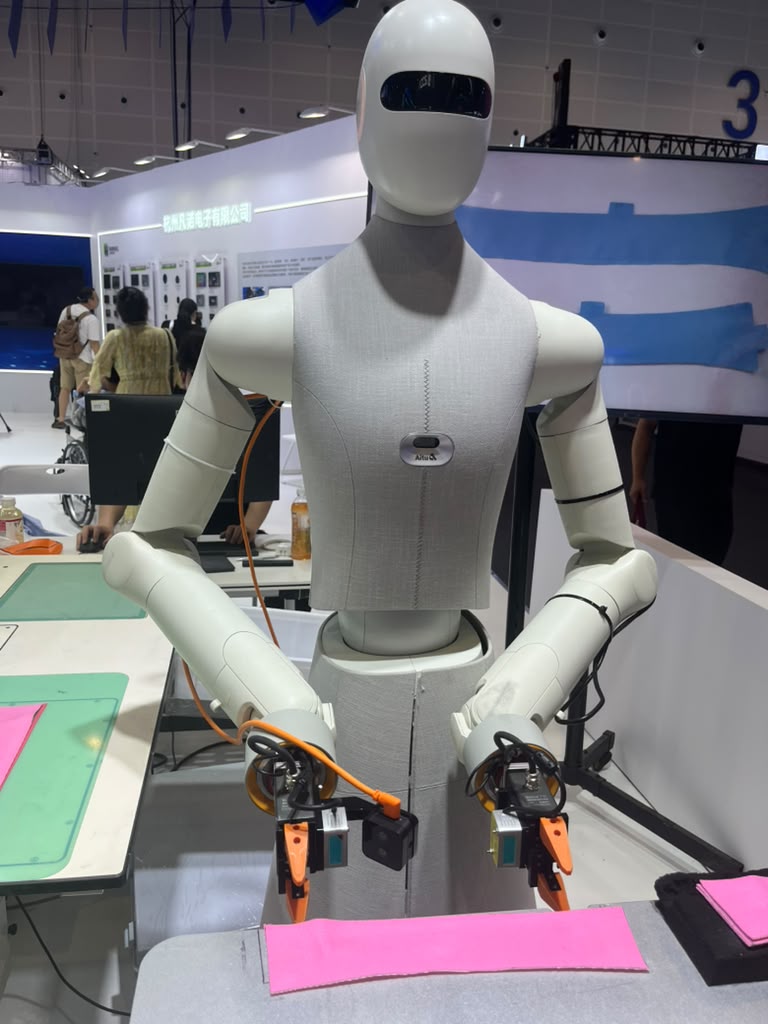
Edge AI represents an important pathway for bringing AI capabilities closer to real‑world devices and operational environments.
This is where Edge AI becomes increasingly relevant.
Turning AI concepts into real‑world applications requires more than advanced AI models. It requires practical solution design, system integration, engineering validation, and reliable deployment capabilities. This is where Qualenex helps organizations bridge the gap between AI innovation and real‑world implementation.
Edge AI brings part or all of an AI workload closer to the device, machine, or operating environment where data is generated. Instead of sending every data point to a remote server for processing, selected AI tasks can be performed closer to the source. This approach can support faster response times, reduce unnecessary data transmission, and provide greater flexibility for applications operating in variable network conditions.
However, moving AI closer to the edge is not simply a matter of placing a model on a device. Real-world Edge AI requires the AI model, computing resources, software environment, connectivity, sensors, and operating scenario to work together reliably.
Why Edge AI Matters for Real-World Applications
Many AI applications operate in environments where response time and system availability matter.
Industrial equipment, intelligent inspection systems, robotics, smart devices, and other AI-enabled applications may need to process information continuously while operating under changing conditions.
In these environments, sending every input to a remote cloud platform may not always be practical. Network latency, connectivity interruptions, data transmission requirements, and operational constraints can all affect system performance.
Edge AI provides another approach by allowing suitable workloads to be processed closer to where the data is generated.
The goal is not necessarily to eliminate cloud computing. In many practical applications, the most effective architecture combines edge and cloud capabilities, with each handling the tasks for which it is best suited.
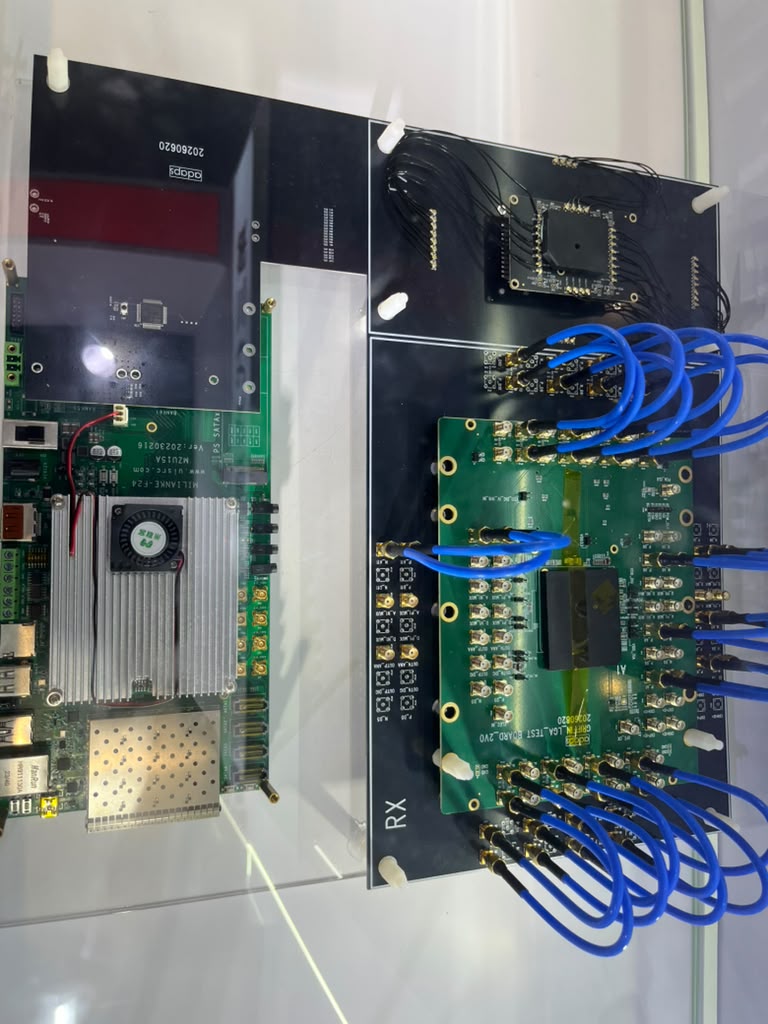
From AI Models to Edge Deployment
A trained AI model is only one component of an Edge AI application.
Moving a model from a development environment to an edge device can introduce new engineering requirements. Computing resources may be limited. Operating temperatures, power consumption, storage capacity, connectivity, and device interfaces may differ from laboratory conditions.
The model may also need to be optimized or adapted for the target computing environment.
This means that Edge AI deployment often involves several layers of work:
- Model and inference optimization
- Computing environment selection
- Software and system integration
- Sensor and device connectivity
- Data flow and communication design
- Performance and reliability testing
- Scenario-specific debugging
- Deployment and ongoing iteration
The exact requirements depend on the application, operating environment, and performance objectives.
The Engineering Challenge Behind Edge AI
One of the most important challenges in Edge AI is balancing technical performance with real-world constraints.
A model may achieve strong results in a development environment but require significant computing resources. A smaller edge device may offer lower power consumption and easier deployment but impose limitations on processing capability.
Similarly, an application may perform well under stable network conditions but require additional local processing when connectivity becomes unreliable.
Successful Edge AI therefore involves more than selecting a model or a device. It requires understanding how the complete system behaves within its intended operating environment.
This is where scenario analysis, prototype validation, system integration, and iterative testing become important.
Have an AI application in mind?
If you’re exploring how to turn an AI concept into a practical, deployable application, we can help connect the right software, hardware, engineering, and manufacturing resources.
Edge and Cloud Can Work Together
Edge AI and cloud AI should not necessarily be viewed as competing approaches.
Many practical systems can combine the two.
Real-time inference or initial data processing can take place at the edge, while larger-scale data analysis, model management, centralized monitoring, or long-term optimization can remain in the cloud.
This distributed approach can provide flexibility while allowing teams to balance response time, computing requirements, connectivity, and operational needs.
The right architecture depends on the specific application rather than following a single universal model.
Turning Edge AI Into a Deployable Application
For AI teams developing technologies for real-world use, the challenge often begins after the model has already been developed.
The next questions include:
How should the model operate within the target environment?
What computing platform is appropriate?
How should sensors and other devices communicate with the system?
What happens when connectivity changes?
How should performance be validated outside the laboratory?
How can the system be refined as real-world data becomes available?
These questions require coordination across AI, software, hardware, engineering, and operational considerations.
A structured implementation process can help teams address these requirements systematically rather than treating each deployment challenge as an isolated problem.
Qualenex and Real-World AI Deployment
At Qualenex, we view Edge AI as part of a broader AI application implementation process.
Our role is not to develop AI models themselves. Instead, we help global AI teams connect their existing technologies with the engineering, integration, and deployment requirements of real-world applications.
Depending on the project, this may involve scenario analysis, computing environment selection, prototype development, system integration, device coordination, testing, and iterative refinement.
The objective is straightforward: help AI technology move from a development environment toward a practical application that can operate reliably in its intended setting.
Conclusion
Edge AI is becoming an important architecture for applications that require intelligence closer to where data is generated.
But bringing intelligence to the edge is not simply a matter of moving a model onto a device. Reliable deployment depends on how the model, computing environment, software, devices, connectivity, and operating scenario work together.
As AI continues to move beyond controlled development environments and into physical and operational settings, implementation and integration will remain essential parts of turning AI technology into practical applications.
For AI teams, the question is no longer only how intelligent a model can be.
It is also how effectively that intelligence can operate in the real world.
Have an AI concept or product idea?
Qualenex helps transform AI concepts into practical solutions through full‑stack design, system integration, engineering validation, and deployment.
Accelerate AI from Concept to Real‑World Application, Together.
Leave a Reply