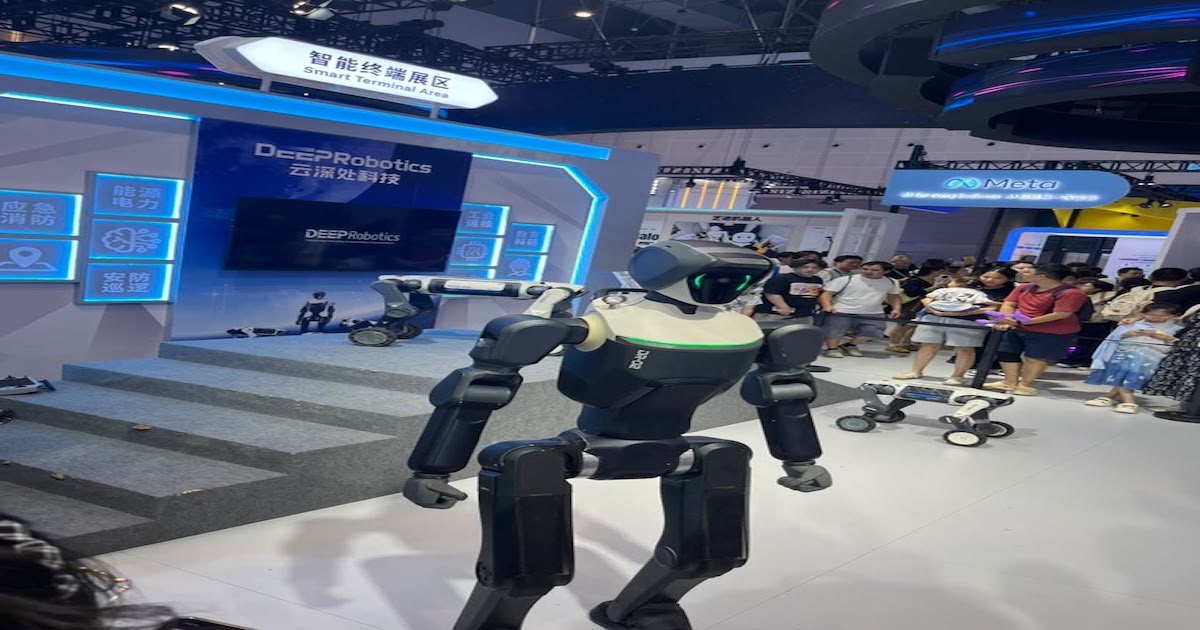
The industrial humanoid robot is stepping out from lab environments and being demonstrated at public industry‑tech exhibitions. Advances in physical‑AI have improved movement and adaptability, yet many real‑world problems remain before these machines can work reliably inside factories. As robot system integrators, we keep tracking each round of new prototype performance.
Robots, intelligent hardware, and industrial AI systems show powerful capabilities in controlled exhibition and lab environments.
However, a large number of enterprise pilot projects face the same dilemma:
The prototype works perfectly, but commercial deployment cannot be stabilized.
The gap between polished demo performance and reliable industrial operation
is what we define as Integration Debt — a significant engineering challenge for Physical AI commercialization.
What Is Physical AI Integration Debt?
In software development, “technical debt” refers to temporary shortcut code that requires systematic reconstruction later.
In physical AI and intelligent hardware industries:
Integration Debt refers to all scene‑specific, environment‑locked, non‑universal optimization logic developed only for prototype verification and demo‑stage performance.
These prototype‑level optimizations include:
‑ Manual parameter calibration for fixed scenes
‑ Hard‑coded rules for standardized objects
‑ Environment‑dependent visual tuning
‑ Temporary workflow patches for demonstration stability
All of these customized adjustments ensure stable performance in controlled lab conditions,
but they are not engineered for generalized, replicable, real‑world commercial scenarios.
Why Integration Debt Blocks AI Commercialization
Real operating environments are fundamentally different from prototype environments:
Unstable lighting, irregular workpiece placement, ground vibration, human interference,
and constantly changing workflow conditions are typical realities of industrial and commercial sites.
Under these dynamic variables:
‑ Prototype‑level accuracy drops significantly
‑ Predefined workflows struggle with dynamic adaptation
‑ Edge cases multiply rapidly
‑ Scene debugging and environment adaptation become extremely resource‑intensive
Technical teams can spend months repeatedly modifying logic and verifying stability after hardware delivery,
often resulting in delayed pilot progress, increased project costs, and unstable operational performance.
Who Bears Physical AI Integration Debt?
Hardware manufacturers and foundational model teams focus on standardized product iteration and technological innovation,
pursuing universal performance scalability and mass production capability.
It is impossible for upstream suppliers to pre‑adapt every customized industrial and commercial scenario worldwide.
Therefore:
Integration debt forms an inevitable engineering gap between standardized AI hardware and personalized real‑world scenarios.
This gap cannot be resolved through hardware iteration or model optimization alone.
It requires professional system integration, scenario engineering, and deployment adaptation services.
Qualenex Positioning: The Engineering Layer Between Innovation and Deployment
Qualenex is not a hardware manufacturer, not a basic algorithm research lab, and not an industry trend analysis platform.
We focus exclusively on the engineering layer between AI innovation and real‑world deployment.
Our core work is to address and manage prototype‑stage integration debt,
restructure deployable industrial workflows,
and complete environment tolerance verification and scenario iterative optimization.
We support global AI hardware startups and industrial solution providers to:
‑ Reduce deployment uncertainty after hardware delivery
‑ Achieve stable transition from prototype verification to real‑world operation
‑ Improve project reliability, scalability, and commercial replicability
Every new exhibition prototype gives integrators valuable reference data. While impressive demos grab public attention, our main job is judging whether these hardware and algorithm combinations can survive day‑to‑day factory conditions. Field observation helps us separate marketing performance from true practical capability. We cannot simply trust demo‑stage results for industrial‑grade work. Real‑world testing remains absolutely critical.
Closing
The future of physical AI is no longer defined by how impressive prototypes look.
It is defined by how reliably AI systems can run in complex, uncontrolled real‑world environments.
If your team is facing deployment adaptation, scene debugging, or pilot stabilization challenges for physical AI systems,
Qualenex provides integration engineering support to help global AI projects move from prototype validation to real‑world deployment.
Leave a Reply